
CIOReview Europe Weekly Brief
Be first to read the latest tech news, Industry Leader's Insights, and CIO interviews of medium and large enterprises exclusively from CIOReview Europe
A featured contribution from Leadership Perspectives: a curated forum reserved for leaders nominated by our subscribers and vetted by the CIOReview Advisory Board.

City of Tampere
Building a Smart, Sustainable City Future
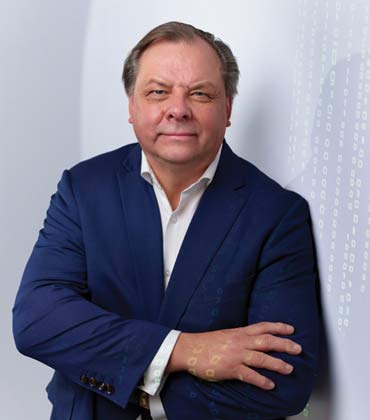
Teppo Rantanen
Mr. Teppo Rantanen, Executive Director for competitiveness and innovation at the City of Tampere, is responsible for several city-wide development programs, with a particular focus on smart city themes (such as the Data-Driven City for Citizens development programme), that shape the strategic economic policy of the city. He leads Tampere through collaboration in extensive international networks toward a cityverse with a human-centric perspective.
Professional Journey to Tampere’s Smart City Leadership
I started my career as a consultant and held roles in global consultancy for more than 30 years, including working in the US, UK, Sweden and Finland, including global leadership positions. My clients included Fortune 500 companies, small and medium-sized businesses, as well as banks and government entities. This background ignited my passion for smart city topics. My fascination with smart cities brought me back to my hometown, Tampere, where I now serve in my current role.
Digitalization and IoT’s Impact on Public Sector
Our city’s smart management comes to life through an IoT platform, where data analysis and artificial intelligence enable us to respond to residents' needs in real-time. Digitalization, IoT and new uses of data and AI have already changed the way our citizens and businesses tackle their everyday challenges— from pupils and teachers in schools learning in new ways, traffic flows and people flows being monitored and guided in a better and predictive way, unemployment being tackled using digital twins and many more examples of how we have seen the change. But at the same time we “ain’t seen nothing yet,” the technology evolution is going to develop the way we do things. The biggest challenges we have had relate to too early adoption of new technologies and thus creating frustration (even though we try to collect data to improve things) and also resistance to taking new technologies into use, mostly due to lack of knowledge and prejudice. You just need to be persistent and share information as much as you can, as well as use citizens’ ability to co-create and innovate as a means to overcome hurdles (but also to get good new ideas).
Key Elements in Creating Public Value
Creating value through ecosystems has always been the key element and success factor in our development. Early on, we understood that companies, academia and the public sector need to work together to create value and new innovation. We need to make sure everyone shares the same goal and also shares the risk and rewards in an ecosystem. Open communication is one of the keys, as well as taking into consideration ideas and suggestions within the ecosystem.
“Boldness, clear goals, and collaboration are key to building successful smart cities, creating value and advancing innovation for future generations”
In Tampere, we want to pass a sustainable, dynamic, and people-centered city for future generations. That’s why initiatives like the Citiverse are essential. We are not just developing a smart city—we are creating a connected, secure, and sustainable ecosystem that fosters progress for everyone.
Economic Strategy Driving Tampere’s Growth
Tampere has enjoyed good economic growth thanks to a focus on key industries and initiatives. We have been able to attract technology companies and a good number of R&D centers to the region, also attracting high-quality individuals to work and study here. The right focuses on globalization and helping both individuals and companies to be successful globally has been driving the development of a globally competitive city.
The Citiverse: Transforming Urban Life
The Citiverse represents the next evolution of smart city development—a path we are already on. The term itself originates from the European Union’s fusion of “citizen” and “metaverse,” highlighting its core focus on people and digital innovation.
At its essence, the Citiverse is a virtual layer seamlessly integrated with urban space, enhancing city life by enabling new experiences, services, and interactions for residents.
For residents, the Citiverse translates into a smoother everyday life. By leveraging an IoT platform, it ensures, for example, timely road maintenance, such as sanding icy streets and provides real-time water quality updates before a swim. Traffic flows more efficiently, and city center services are optimized with the Pulse app, which predicts customer flows and helps allocate the right amount of staff, for example, in cafes and restaurants.
The Citiverse also empowers citizens to take part in the urban planning of future neighborhoods through digital twins, making participation easier and city plans more transparent.
In the Citiverse, we harness smart technologies and data to find new ways to actively support biodiversity and climate actions.
Another example is our AI model, which has led to the creation of new, needs-based services for children, young people, and families—developed in collaboration with the community.
In the Citiverse, digital solutions don’t just enhance infrastructure but they seamlessly integrate into social and urban life, making cities more responsive, inclusive, and sustainable.
This spring, cities and companies from around the world will gather in Tampere to explore the opportunities of the Citiverse at the Imagine the Citiverse event on May 27–28. (www.imagine2025.fi)
Advice for Other Cities in Smart City Development
It is always a good idea to talk to other cities that are ahead in the development curve and will have experience to share. It is also very important to understand the nature of your city and find the unique elements that require special attention and maybe a different approach. But most of all, remember that being bold and having a clear goal is the key to success in this area as well.
